Virginia Democrats have proposed a 10–1 congressional redistricting map that would give their party a significant advantage in 10 of the state’s 11 U.S. House districts. The plan, released in early February 2026, aims to counter Republican-led redistricting efforts in other states and could flip four Republican-held seats if implemented.
The map is part of a broader constitutional amendment that would allow the General Assembly to redraw congressional districts mid-decade, bypassing the bipartisan redistricting commission voters approved in 2020. This amendment is set to go before voters in a referendum on April 21, 2026, but faces legal challenges.
All of this in the name of “Fairness?”
The Question before the voters:
Question: Should the Constitution of Virginia be amended to allow the General Assembly to temporarily adopt new congressional districts to restore fairness in the upcoming elections, while ensuring Virginia’s standard redistricting process resumes for all future redistricting after the 2030 census?
To be clearer, the fairness in question isn’t about fairness for Virginia voters. No, it’s to counter perceived impacts from other states’ redistricting and has nothing to do with what Virginians want. Leaving Virginia with a 10-1 Democratic advantage is not about fairness for Virginia; it’s a nationwide power grab.
When state legislatures make decisions based on the actions in other states, we have a problem. The notion of representation of the people gets blurred, and we ask, who does the Virginia Legislature represent: Virginians, Texans, or citizens of other states where Democrats have failed to sustain a healthy base?
(Authors thought: Might there be a constitutional case at the federal level when state-level representation of citizens is abandoned in favor of unifying the weaponization of state constitutions against the peoples of not just individual states but all states? How can the apparent formation of a parallel nation at war with the nation from which it took its birth stand? )
Legal and political hurdles remain: a Tazewell County judge issued a temporary restraining order blocking the referendum, citing constitutional concerns. The case is now before the Virginia Supreme Court, which will decide whether the vote can proceed.
Governor Abigail Spanberger, a Democrat, has signed the budget bill containing the proposed map (what the map has to do with the budget is anyone’s guess), though its implementation depends on voter approval of the constitutional amendment. Republicans, including U.S. Rep. Jen Kiggans and state leaders, have condemned the plan as partisan gerrymandering and filed lawsuits, with the RNC and NRCC actively challenging the process.
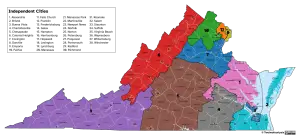
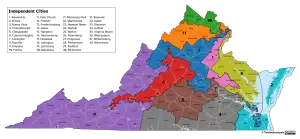
For a visual perspective, below are graphics representing the current legislative map in Virginia and the proposed changes.